Why Every Classroom Needs a Behavior Clip Chart


Behavior clip charts are a staple in many classrooms and act as a handy visual tool to track student behavior throughout the day. They work by using movable clips or markers that slide up and down behavior levels from truly outstanding moments to times when a little improvement wouldn’t hurt. Teachers often juggle the tricky task of managing a whole spectrum of student behaviors while trying to keep the peace and nudge students toward better choices. What’s great about behavior clip charts is how they offer quick and clear feedback that gently encourages kids to tune in to their actions and own up to them.
Understanding Behavior Clip Charts and How They Actually Work
A behavior clip chart typically shows a bright vertical lineup of behavior levels like Outstanding, Good Choices, Ready to Learn, Think About It and Parent Contact. Each student gets a clothespin or marker clipped onto one of these levels. It can slide up or down depending on how their day is going behavior-wise. This system offers students immediate visual cues and helps teachers manage classroom behavior in a clear and consistent way.
- Behavior clip charts are pretty straightforward and easy for students of all ages to get the hang of, making them super accessible right out of the gate.
- They offer clear visual cues, so students can instantly check their behavior status without waiting for a verbal nudge.
- Immediate consequences bring timely reinforcement or quick corrections, which usually does wonders for keeping the learning on track.
- Their flexible design lets teachers tweak the charts to fit a variety of classroom vibes and cater to different student needs.
- Customization is a breeze, giving teachers the freedom to toss in their own rewards or switch up categories to suit their unique management style.
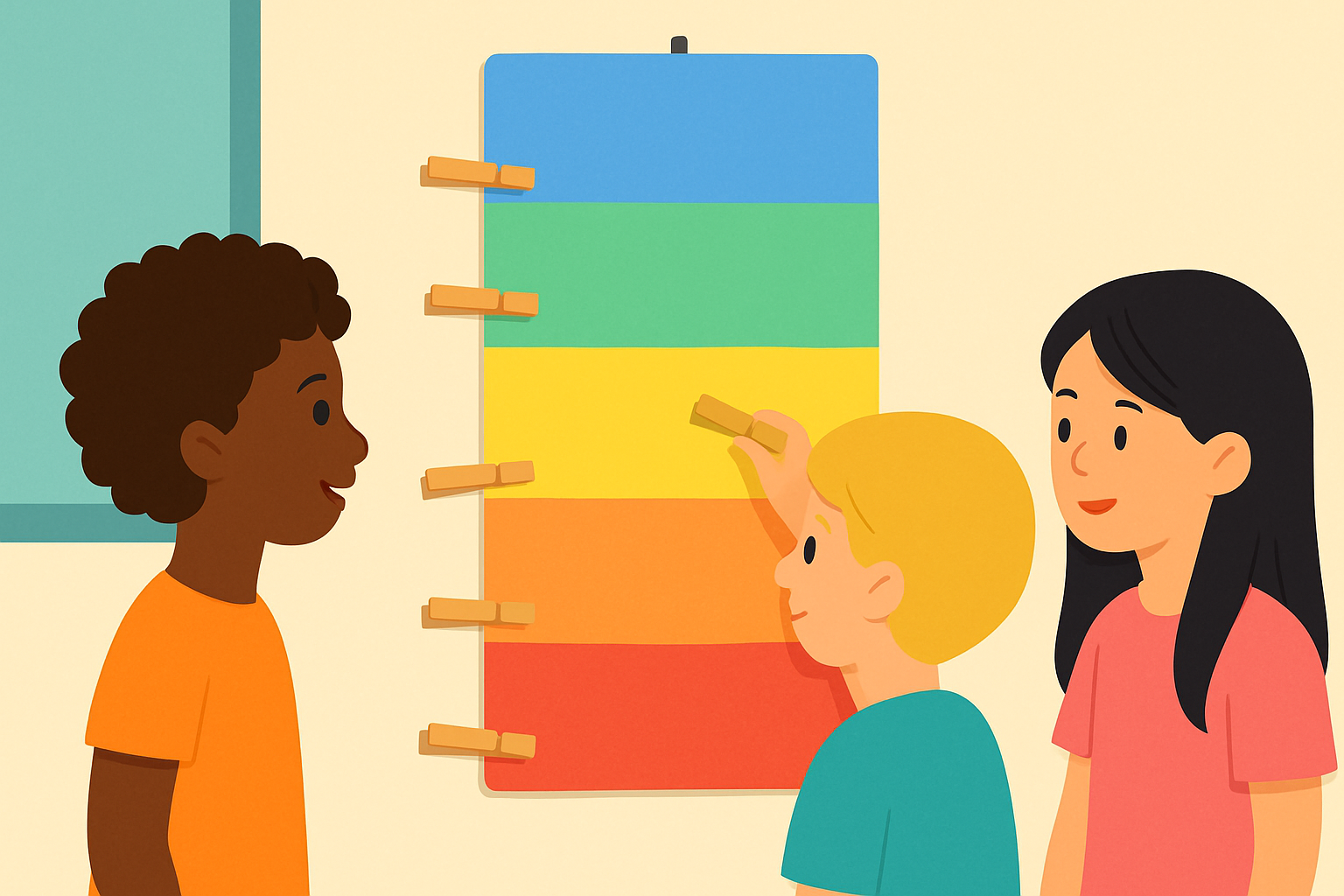
A typical behavior clip chart displayed in a classroom, showing colorful sections and student clips.
The Importance of Behavior Clip Charts in Every Classroom
Managing classroom behavior can sometimes feel like trying to herd cats. Behavior clip charts have become such a trusty sidekick for teachers everywhere. These charts gently guide students towards better choices while celebrating the little victories along the way. In my experience, they add a splash of structure without turning the classroom into a drill sergeant's playground. Plus, seeing a student's clip move up, even just a notch, can brighten their whole day and honestly, who does not love a bit of positive reinforcement peppered in with their learning?
Behavior clip charts bring a bunch of educational and psychological perks to the table. They gently nudge students toward self-regulation by helping them tune in to and take charge of their own behavior. The system leans on positive reinforcement to shine a spotlight on good choices, which in turn fosters a classroom vibe rooted in respect.
- Visual tracking lets students keep an eye on their progress and own their actions.
- Real-time feedback gives them the chance to tweak their behavior before things spiral.
- By checking in regularly on their clip status, students build solid self-management skills.
- It also makes parent-teacher chats smoother thanks to a clear everyday log of behavior.
- Classroom rules improve because it links behavior choices directly to consequences everyone can see.
- Plus, it helps create a positive vibe in the classroom where good behavior gets noticed and morale lifts.
"Since I started using behavior clip charts, I have really seen a noticeable shift in how tuned in and engaged the students have become. It’s like giving them a visible roadmap for their choices, which nudges them to own up to their actions. Plus, it quietly weaves a classroom vibe that’s all about respect and good energy." — Mrs. Elena Martinez, 3rd Grade Teacher
A Step-by-Step Guide to Using a Behavior Clip Chart in Your Classroom
Getting this right can really change the classroom vibe, so let us walk through it together with a few handy tips along the way.
Using a behavior clip chart well takes thoughtful planning and clear communication to keep everyone on the same page. Teachers need to tailor the chart to fit their unique classroom vibe, lay out clear behavior expectations and introduce the system in a way that feels positive and encouraging to the students. Sticking with it consistently throughout the day and offering regular feedback makes the whole thing run smoother.
Choose or design a behavior clip chart that clicks with your classroom’s vibe and the age group you’re teaching because one size definitely doesn’t fit all.
Lay out clear and specific behavior expectations for each color level on the chart so there’s no guesswork.
Clarity goes a long way when you carefully walk students through how their clips can move up or down based on behavior.
Keep an eye on where each clip lands throughout the day and offer prompt feedback and encouragement to keep motivation buzzing.
Make it a point to regularly celebrate positive behavior with incentives or rewards tied to those top levels. It’s amazing how a little recognition can brighten a kid’s whole day.
Keep communication open by sharing student progress with parents through notes, emails or conferences. Build that strong partnership outside the classroom because it really makes a difference.
Adapting Behavior Clip Charts to Fit Different Classroom Needs
Sometimes, a one-size-fits-all approach just doesn’t cut it when it comes to behavior clip charts. After all, every classroom has its own rhythm and quirks, right? So, tweaking these charts to better match your unique vibe can make all the difference in keeping things smooth and effective. It’s a bit like adjusting the recipe to your taste—just a pinch of this, a dash of that—to get the perfect blend for your students’ needs.
Every classroom has its own vibe so behavior clip charts should fit the unique quirks and needs of the students. Whether you are juggling different grade levels or managing special education requirements, considering cultural backgrounds or handling a big group, tailoring the chart makes a big difference in keeping it effective and inclusive. Tweaks could mean switching up colors, involving the students in designing it, or bringing technology into the mix to better support learners with special needs.
- Tweak color meanings or introduce new behavior levels to better match your students’ developmental stages or the vibe in the classroom.
- Add personalized rewards that genuinely resonate with each student’s unique motivations and interests. It’s amazing what a little customization can do.
- Get students involved in setting up the chart rules. This not only increases their sense of ownership but also makes the system feel more culturally relevant and less like a chore.
- Tap into digital options like apps or interactive whiteboards, especially if you are working with tech-savvy classes or remote learning situations because that’s where the world is headed.
- Tailor consequence levels for students facing behavioral challenges by focusing on encouraging growth instead of just applying punishment. Support usually works better than a scolding.
Common Challenges and How to Rise Above Them
Behavior clip charts can definitely be a useful tool but they’re not without quirks and pitfalls. For instance, there’s the risk of unintentionally embarrassing students or leaning too heavily on external rewards that might not motivate in the long run. Some kids might feel like they’re under a microscope. If the charts aren’t managed with a gentle touch they can spiral into negative labeling or spark conflict.
- Focus on growth and improvement rather than just nitpicking mistakes. It is about avoiding negative labels that stick like glue.
- Keep things fair by applying the rules consistently to every student regardless of how well you know them because favoritism has no place in the classroom.
- Pair clip charts with positive reinforcement and genuine verbal praise to spark intrinsic motivation.
- Use the chart as a tool to open up meaningful conversations about behavior and emotions rather than as a shortcut that replaces important chats.
- Consider adjusting where the chart is displayed or adding privacy screens to protect student privacy and prevent awkward public moments no one enjoys.
Balancing behavioral tools like clip charts with genuine emotional support and strategies that nurture intrinsic motivation goes a long way in shaping students who aren’t just rule-followers, but truly well-rounded and self-aware individuals. — Dr. Allison Greene, Educational Psychologist
Combining Behavior Clip Charts with Other Classroom Management Techniques with a Few Tricks up Your Sleeve
Behavior clip charts usually shine brightest when woven into a well-rounded classroom management plan. They support positive behavior interventions and restorative practices and social-emotional learning (SEL) efforts by clearly laying out behavior expectations. Pair them with genuine verbal praise, clear goal setting and some family involvement and you have got a recipe for creating a consistent and supportive environment.
| Technique | Purpose | When to Use | Strengths | Limitations |
|---|---|---|---|---|
| Behavior Clip Charts | Keep an eye on daily student behavior at a glance | Used daily in the classroom | Offers instant feedback and nudges responsibility | Can embarrass students if not handled with care |
| Positive Behavior Interventions (PBIS) | Boost positive behavior school-wide | Rolled out as a whole-school approach | Builds a supportive vibe and leans on solid data | Requires buy-in from everyone on campus |
| Restorative Practices | Smooth over conflicts through honest conversations | After behavior bumps occur | Encourages empathy and tightens relationships | Takes time and needs facilitators who know their stuff |
| Social-Emotional Learning (SEL) | Help students manage emotions and grow skills | Woven regularly into the curriculum | Supports deep emotional growth over the long haul | Benefits can be slow to show, not always obvious right away |
| Verbal Praise | Cheer on and affirm good behaviors | Whenever it fits naturally | Easy to give and really motivates students | Tougher to measure compared to charts or visuals |
| Goal Setting | Help students nail down and chase personal goals | Used periodically in one-on-one sessions | Fosters ownership and keeps focus locked in | Needs regular check-ins and tracking to keep on course |
Using clip charts with verbal praise and personalized goals and consistent parent involvement tends to create a powerful combo.

Teacher using behavior clip charts alongside verbal praise and goal setting in an inclusive classroom.
Measuring the Impact of Behavior Clip Charts
For behavior clip charts to hit the mark, teachers need straightforward ways to keep an eye on progress and track how behavior shifts over time. Peeking at both individual and class-wide data often helps fine-tune the system and even spruces up the classroom atmosphere.
- Use daily or weekly tracking sheets to closely monitor behavior clip movements and identify any patterns that may be emerging.
- Encourage students to keep self-reflection logs where they can honestly assess their own behavior and set meaningful goals.
- Keep communication with parents wide open because teamwork is essential for supporting your students.
- Make it a habit to regularly review behavior incident reports so you can identify recurring issues or celebrate progress when it appears.
- Examine how behavior trends relate to academic performance to get a complete picture of what’s really happening.